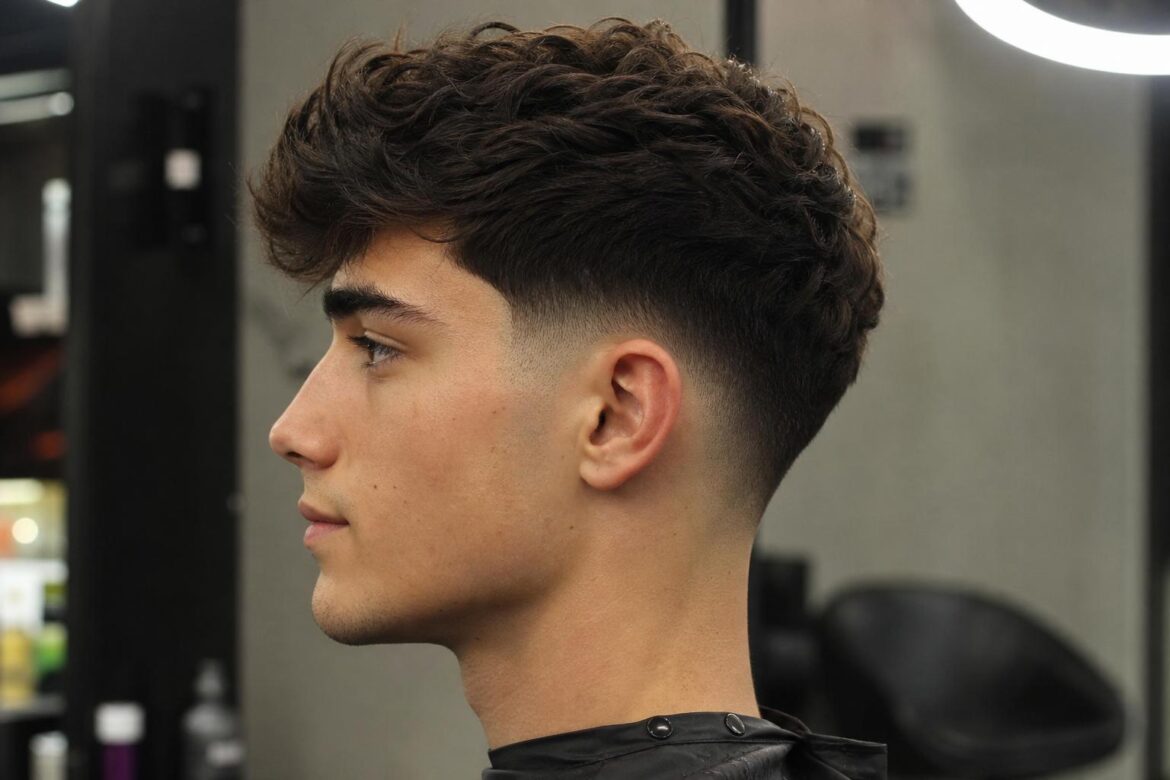
Thinking about a mid taper fade but not totally sure what to ask for, which variation suits your hair, or how much you should pay in your city? You’re in the right place. This is a practical, no-fluff guide written for Canadians who want a sharp haircut that works for the office, hockey night, date night, and everything in between.
We’ll break down what a mid taper fade actually is, how it differs from other fades, how to tailor it to your hair type and face shape, and exactly how to talk to your barber so you get it right the first time. You’ll see typical Canadian pricing, maintenance schedules, smart product picks you can find easily at Canadian retailers, and a clear look at health and safety rules that barbers follow here. Along the way, you’ll pick up tips you can use immediately—whether you’re booking in Toronto, Vancouver, Calgary, Montreal, Halifax, or anywhere else.
What Exactly Is a Mid Taper Fade?
Let’s start with clarity. A “taper” means the hair gradually shortens near the sideburns and the nape of the neck, usually keeping a natural finish rather than shaving everything to skin. A “fade,” strictly speaking, is a blend that can go all the way down to bare skin before transitioning back into longer lengths above it. In everyday conversation, though, people use “taper,” “fade,” and “taper fade” interchangeably. That’s where confusion starts—and how good haircuts turn into mismatched expectations.
The mid taper fade lands right in the middle of the head’s vertical profile. Picture the height between your temple and the top of your ear: that’s where the shortest area starts to show. It’s higher than a low taper fade, which hugs close to the ear and hairline, and lower than a high fade, which climbs toward the parietal ridge (the head’s widest point). The result? A balanced cut that feels clean around the edges without making the top look disconnected or too dramatic for conservative settings.
Now, do you want “skin” in the taper? Many barbers will ask. A “mid taper fade to skin” means the shortest point at the temple and nape is shaved or buzzed to zero, then blended upward. A “mid taper” without skin keeps stubble—say, a #0.5 or #1 guard—so there’s definition without exposing pale skin. This choice changes the vibe. Skin looks ultra-crisp and shows contrast; keeping stubble reads softer and grows out a touch more gracefully.
Why Canadians Love the Mid Taper Fade
Canada rewards practical style. You might bundle under a toque in January and cruise a patio in July—ideally with the same haircut. A mid taper fade behaves in both worlds. It leaves enough length up top to style, yet cleans up the hairline so you look fresh even after taking off a helmet or hood. Unlike an aggressive high fade, it’s rarely “too much” for workplaces with conservative dress codes. And unlike a low taper, it shows its shape even when you’ve got a jacket collar brushing the back of your head.
The cut also works across hair textures you see coast to coast. Straight, wavy, curly, coily—it adapts. In multicultural cities like Toronto and Vancouver, or in communities across the Prairies and the Atlantic provinces, barbers cut a wide range of hair types every day. That experience baked into Canadian shops means you can ask for a mid taper fade and trust you’ll get a version tailored to your hair’s growth patterns, density, and shape.
There’s a practical money angle too. The mid taper fade grows out well. If you stretch your cuts to every four weeks instead of every two or three, it won’t look unruly as quickly as a super high skin fade. In most Canadian cities, that can save you a couple of visits a year—and a few hundred dollars, depending on your barber’s rate.
Choosing the Right Mid Taper Fade for Your Hair Type
Hair type dictates how bold or subtle your mid taper fade should be. You don’t need a cosmetology textbook to get this right—just a few grounded tips.
Straight or Fine Hair
Straight, fine hair can look thin around the temples if you cut it down to skin. If you like contrast but don’t want to risk “see-through” edges, ask for a mid taper that starts at a #0.5 or #1 guard. Keep some weight above the taper so the blend doesn’t look hollow. On top, go for texture: a matte clay or paste worked through dry hair creates the illusion of density without shine separating strands.
Growth direction matters. If your hair lies flat, a mid taper fade with a textured crop or a short quiff adds height and shape. If your crown swirls wildly, a slightly lower taper at the back helps avoid choppy spots as it grows out.
Wavy Hair
Wavy hair and a mid taper fade are natural partners. The taper cleans the perimeter; the waves add motion up top. If your waves are loose, keep the top from 2 to 4 inches and use a sea-salt spray plus a lightweight cream. This will encourage movement without crunch. For those with denser, tighter waves, a mid taper with a “drop” at the back (the blend dips slightly as it rounds the head) respects head shape and avoids a blocky silhouette.
Want more definition? Diffuse on low heat for two to three minutes. In winter, a dab of leave-in conditioner under your styling cream helps fight static from scarves and coats.
Curly Hair
Curly hair thrives with a mid taper fade because the clean edges make curls look intentional, not unruly. Many curly clients prefer a mid taper that doesn’t go to skin—say, a #0 to #0.5 at the very edge—so grow-out is softer and avoids stark contrast with lighter winter skin. Keep the top hydrated with a curl cream and a touch of gel to set the shape. Avoid heavy oils that collapse volume at the roots; they can make the taper look lower than it is.
For shape, ask the barber to debulk with scissors where curls mushroom out. A mid taper fade paired with slightly elongated curls on top frames the face well and still fits business settings across Canada.
Coily, Kinky, or Type 4 Hair
On Type 4 hair, a mid taper fade sharpens the outline of the cut while keeping crown volume and pattern. Decide how dramatic you want the contrast. A true “mid taper fade to skin” around the temple and nape, plus a razor lineup, creates high definition, especially on darker hair. Prefer a softer presentation? Ask for a guard like #0.5 at the edge, blended using lever play instead of a hard skin finish.
Maintenance is key for comfort. To reduce irritation and razor bumps around the nape and beard line, ask for trimmer-only or single-use razor with a light touch. Many Canadian barbers will also offer a post-shave astringent that’s alcohol-free or witch-hazel based. Moisturize daily with a non-comedogenic lotion or beard oil to limit ingrowns. A mid taper fade pairs neatly with sponge curls, twist-outs, or waves (durag overnight to set pattern), giving you crisp sides without losing texture up top.
Thick, Coarse, or High-Density Hair
Thick hair looks fantastic with a mid taper fade because the blend has something to bite into. The trick is weight control. If you leave too much bulk just above the taper, the sides balloon within a week. Ask your barber for gentle internal layering or thinning shears right above the fade line. Up top, matte products with a drier finish—like clay or a high-hold paste—keep shape without adding volume you don’t need.
Face Shape, Head Shape, and the Mid Taper Fade
Two people can ask for the same mid taper fade and walk out with different looks—and both can be right. Tailoring to face shape and head shape is what makes a cut look “made for you.”
Oval faces handle nearly any variation. Keep the mid taper at a true mid height, and decide on skin or no skin based on personal style. Square faces benefit from a slightly lower taper at the temple and a touch more length on top to soften strong angles. Round faces like contrast: go slightly higher at the temple (still within mid territory) and add a textured top with height to elongate the face.
Diamond or heart-shaped faces often appreciate a mid taper that’s a bit lower at the back and temple, preserving width near the parietal ridge to balance a narrower jaw. If you’ve got a long or oblong face, avoid taking too much off the top. Keep length and go with a mid taper that doesn’t climb too high so proportions stay grounded.
Head shape matters too. If you have a pronounced occipital bone (the bump at the back of the skull), a “drop” in the mid taper fade helps the blend follow the skull naturally. Cowlick at the nape? Ask the barber to start the taper just above it so growth doesn’t fight the finished look.
How to Ask for a Mid Taper Fade at a Canadian Barbershop
Clear communication makes or breaks a haircut. In Canada, most barbers are familiar with North American terminology, but a quick, structured request keeps things smooth. Think of it like ordering a coffee: size, strength, extras.
- Start with the base: “I’d like a mid taper fade.”
- Define skin or not: “Keep it to a #0.5 at the temple and nape, not skin,” or “Go to skin around the edges.”
- Top length and style: “Leave two to three inches on top for a textured crop,” or “I want a clean side part with about 1.5 inches.”
- Neckline preference: “Natural neckline with a mid taper,” or “Boxed but tapered into the sides.”
- Beard: “Blend the taper into a short beard,” or “Keep sideburns off, no beard.”
- Finish: “Matte finish, nothing shiny,” or “Slick with medium shine.”
- Growth quirks: “I have a cowlick at the back; can we keep the taper slightly lower there?”
Show two or three photos that match your hair type—not just the style. If the person in the photo has thicker, curlier hair than you, say what you like about the photo so the barber can translate the idea to your texture: “I like how clean the temple area looks and the length on top.” A good barber will repeat your request back in their own words so you can confirm details before the first clipper touches your head.
Clipper Guard Number Guide
If you want to talk guard numbers, use this as a quick reference. It helps when you’re describing how short you want the shortest point of your mid taper fade and the length you want left on the sides above it.
| Guard # | Inches | Millimetres (approx.) | Typical Use in a Mid Taper Fade |
|---|---|---|---|
| #0 (open blade) | ~1/16″ | ~1.5 mm | Ultra-short stubble without skin |
| #1 | 1/8″ | 3 mm | Soft taper edge, conservative finish |
| #2 | 1/4″ | 6 mm | Low-contrast taper, longer sides |
| #3 | 3/8″ | 10 mm | Blend guard above the taper |
| #4 | 1/2″ | 13 mm | Common length for conservative sides |
| #6 | 3/4″ | 19 mm | Fuller sides prior to scissor blending |
| #8 | 1″ | 25 mm | Very full sides; often scissor over comb |
Remember: a “fade to skin” doesn’t use a guard at the very edge—it goes to bare skin with a trimmer or foil shaver, then blends up into guarded lengths.
Using Photos the Smart Way
Photos are helpful if you frame them properly. Say what you like: the height of the taper, the softness or sharpness of the lineup, how much the top lifts. Mention what you don’t like too. And choose people with similar hair type and hairline to yours so the translation is realistic. If your hair is fine and straight, a photo of a mid taper fade on thick, curly hair won’t reproduce line-for-line on your head.
Common Misunderstandings and How to Avoid Them
“Taper vs fade” is the big one. If you don’t want skin showing, say so explicitly. If you do want skin, say where: only at the very edge of the temple and nape (true taper), or extending up several centimetres (more of a mid skin fade). Another pitfall: neckline shape. Some people like a natural, tapered neckline; others want a sharp squared (boxed) finish. If your hair grows strong at the nape, a tapered natural line will last longer and look cleaner between visits.
Regional Pricing, Booking, and Etiquette in Canada
Prices vary widely by city, neighbourhood, and the barber’s experience. A mid taper fade usually prices the same as a standard men’s cut or a fade cut. Here’s a snapshot to help you plan. These are ballpark ranges for barber shops as of recent years; check your local shop for current pricing.
| City | Typical Price for Mid Taper Fade (CAD) | Notes |
|---|---|---|
| Toronto (GTA) | $40–$80+ | Downtown and boutique shops skew higher; student discounts in some areas |
| Vancouver | $40–$85 | Higher rents reflected in pricing; East Van and suburbs often lower |
| Montreal | $30–$70 | Varies by arrondissement; bilingual booking common |
| Calgary | $35–$75 | Downtown higher; suburban shops competitive |
| Edmonton | $30–$70 | Plenty of options; beard add-ons modestly priced |
| Ottawa | $35–$75 | ByWard/Elgin premium; Gatineau often slightly lower |
| Halifax | $30–$65 | Student and military communities influence demand |
| Winnipeg | $30–$65 | Independent shops common; cash discounts in some places |
Tipping norms in Canada typically fall in the 15–20% range for good service. If the shop uses booking platforms like Fresha or Booksy (both common here), check their cancellation and no-show policy. Same day cancellations may incur a fee. Many shops prefer debit or tap payments; cash is still welcome but not always required. Taxes (GST/HST/PST) may or may not be included in the sticker price—if it matters to your budget, ask or check the online listing.
How Often to Maintain a Mid Taper Fade—and What It Costs
If you like your edges razor-sharp, plan on visiting every two to three weeks. If you prefer a softer grow-out, four weeks is often fine. Stretching to six weeks works if the taper is conservative and you’re okay with at-home neckline cleanups.
Budget example: In Toronto at $60 per cut every four weeks, that’s roughly $780 a year before tips. In Halifax at $45 every five weeks, you’re closer to $468 a year. Add beard services or hot towel shaves as occasional upgrades if you want a treat without bumping up your base frequency.
Step-by-Step: How Barbers Create a Mid Taper Fade
Knowing the process helps you recognize good work and communicate mid-cut if you see something you want adjusted. Here’s a typical flow a skilled barber might use for a mid taper fade.
1) Map the Fade and Debulk
First, the barber identifies the “mid” line at the temple and around the back. They’ll often start with a higher guard on the sides (like a #3 or #4) to set the general shape and remove bulk. This makes blending easier and reveals head shape and cowlicks.
2) Create the Taper at the Temple
They’ll set the lowest line at the temple area using a trimmer or an open-blade clipper (for skin or close stubble). Then they’ll work up in small increments: open lever, then #0 guard, then #0.5, #1, and so on—flicking out to avoid hard lines. The mid taper fade is all about restraint; it shouldn’t shoot too high too fast.
3) Shape the Nape
At the back, the barber repeats the process, respecting your neckline preference (natural, rounded, or boxed). A natural, tapered neckline usually looks better as it grows—not as stark when stubble returns under winter scarves and jacket collars.
4) Blend the Sides into the Top
With the foundational taper set, they’ll blend up into the sides and the top using clipper-over-comb, guards (#2-#4), and scissors. This is where “mid” shows its strength—it preserves head shape instead of removing so much side length that the top appears detached.
5) Detail Work and Lineup
Edgework—cleaning the outline around the forehead, temple, and nape—makes the cut pop. Many Canadian shops use single-use razor blades for shaving the perimeter. Provincial and territorial health regulations generally require proper sanitation and single-use or sterilized blades for any service breaking the skin. In Ontario, for example, personal service settings must follow public health rules under provincial regulation to use clean, disinfected tools and single-use razor blades. If your skin is sensitive, ask for a trimmer-only lineup and an alcohol-free aftershave.
6) Finish and Style
Good barbers style your hair to show how it should sit. If you see volume where you want flatness (or vice versa), this is your moment to say so. Ask them to walk you through the exact steps and product amounts—then snap a quick photo so you can repeat it at home.
Styling the Mid Taper Fade: Everyday to Special Events
Your styling routine doesn’t need to be complicated. Choose products with the finish you like—matte for natural texture, cream for soft control, pomade for shine, gel for hold—and keep the application light. Here’s how to make the mid taper fade work for different looks.
Textured Crop (Low Effort, High Return)
Towel-dry. Mist sea-salt spray (two to four pumps). Work a pea-sized amount of matte clay between your palms until it disappears, then rake through the top. Pinch a few pieces at the fringe. You’re done in 90 seconds.
Side Part (Office-Friendly)
Blow-dry on low while brushing into your natural part. Emulsify a dab of cream or light pomade; apply from back to front to avoid gunking up the fringe. Comb in your part, then loosen slightly with your fingers so it doesn’t scream “board meeting” unless that’s the goal.
Short Quiff (Weekend-Ready)
Apply a pre-styler (sea-salt or volumizing spray). Blow-dry with fingers, lifting at the front. Finish with a matte paste for height that lasts without helmet hair.
Curly Top (Defined but Soft)
On damp hair, apply a curl cream or leave-in conditioner. Scrunch. Air dry or diffuse on low. Once dry, rub a tiny bit of lightweight pomade between your fingers and skim the surface to break up any crunch, keeping the taper’s clean edge as the visual anchor.
Coily Top with Sponge Curls or Twist-Outs
Moisturize with a light leave-in. Add curl-enhancing cream. Use a curl sponge in circular motions to set texture, or twist sections and allow them to set. Maintain the taper’s edges with a soft brush to keep lint away, especially under toques.
Products You Can Buy Easily in Canada
You don’t have to hunt. Look for brands readily available at Shoppers Drug Mart, London Drugs, Chatters, or Canadian barbershops. Popular picks include Victory Barber & Brand (founded in Victoria, BC), Crown Shaving Co. (Toronto), Rocky Mountain Barber Company (Ontario), along with international staples like Reuzel, Layrite, American Crew, Hanz de Fuko, and STMNT. Online, Amazon.ca and Well.ca usually keep reliable stock. For sensitive skin, fragrance-free options are worth a look, especially in dry winter months when scalps protest.
Beards, Brows, and Sideburns: Finishing the Look
A mid taper fade looks extra clean when it flows into facial hair intentionally. If you wear a beard, ask for a beard fade that starts at the sideburn and increases length as it approaches the jawline. This keeps the transition from the temple taper to the cheek looking seamless. If you prefer a stubble-only finish, a crisp line at the cheek and a natural neckline under the jaw will stay tidy the longest.
Brows and sideburns are small details that change the overall impression. Slightly trimming long brow hairs and tapering sideburns to a length that matches your beard or your ear height brings harmony to the face. Nothing dramatic—just neat.
Maintenance at Home Between Appointments
Want your mid taper fade to hold its shape longer? A few small habits pay off.
- Neckline cleanup: Use a simple trimmer to remove stray hairs below the natural neckline once a week. If you’re unsure of your line, place two fingers above your Adam’s apple; that’s a safe starting height for most. Keep the shape rounded or natural—avoid carving too high.
- Wash schedule: Two to four times a week is enough for most. Over-washing in Canadian winters can dry your scalp. Condition more often than you shampoo if your hair is curly or coily.
- Combat hat hair: Keep a travel-size sea-salt spray or lightweight grooming cream in your bag. A light mist and a quick finger restyle when you ditch the toque can revive lift.
- Blade and tool hygiene: If you edge at home, disinfect clipper blades with a clipper spray or 70% isopropyl alcohol and a brush. Store trimmers dry to avoid rust.
- Skin care: Use a gentle, non-striping shampoo and a soothing aftershave around the nape if you’re prone to irritation. Moisturize daily to reduce ingrowns.
Health, Safety, and Regulations Canadians Should Know
Barbers in Canada operate under provincial or territorial public health rules for personal service settings. While the exact wording differs across jurisdictions, the fundamentals are consistent: clean, disinfected tools; single-use items where required; hand hygiene; and proper handling of sharps. If a service breaks the skin (like a razor lineup or neck shave), disposable blades are the standard and must not be reused.
In Ontario, for example, personal service settings are regulated under provincial public health legislation with requirements around disinfection, single-use razors, and records. Municipal public health units inspect shops. In British Columbia, public health guidelines set standards for personal service establishments that include disinfection practices and safe handling of sharps. Across Canada, it’s normal for barbers to use a new, single-use blade for any straight-razor work and to disinfect clipper blades between clients. If you’re ever unsure, you can politely ask about their sanitation process—professionals won’t mind.
Have a skin condition (psoriasis flare-up, open acne lesions, cuts) at the hairline? Mention it. Your barber can adjust techniques, skip razor work, or suggest postponing certain steps to avoid irritation. If you’re allergic to fragrances or alcohol, request fragrance-free or alcohol-free aftercare.
Mid Taper Fade Variations You’ll See on Canadian Streets
“Mid taper fade” is a family of looks. Knowing the subtypes helps you point to what you want.
Mid Taper Fade to Skin
Sharp contrast at the temple and nape, blended up into the sides. Great for crisp definition. On paler winter skin, it stands out more; on summer skin, the contrast softens a bit.
Mid Taper (No Skin)
Edge is clipped with a guard (e.g., #0.5 or #1) for a subtle finish. Grows out gracefully and is ultra office-friendly. Perfect if you wear hats often and don’t want a hard demarcation when hair lifts or lays down.
Mid Drop Fade
The blend dips as it moves to the back of the head, following the skull. This keeps the back clean while preserving shape up top. Especially handy if you have a prominent occipital bone or prefer a rounded silhouette.
Burst Taper
Focuses the taper around the ear, creating a “burst” of shortness that blends into longer hair above and behind the ear. Combine with a mid height and you get a lively edge without hollowing out the sides.
Blowout (Temple Taper) with Mid Height
Emphasizes volume on top with a mid-height temple taper. Popular with wavy and curly hair—think height at the front, clean sides, and a relaxed back.
Mid Taper Fade with Textured Crop
Short, choppy top; clean mid taper on the edges. Easy to maintain, presentable for work, and still modern for nights out in the city.
Afro Taper (Mid Height)
Keeps length and shape up top while tapering the temple and nape at mid height. Edgework can be soft or razor-sharp. Works beautifully with twist-outs, sponge curls, or waves.
Hockey Flow + Mid Taper
Yes, you can mix flow with a taper. Keep back length beyond the collarbone minimal to avoid a mullet unless that’s the point. The mid taper at the temple makes the sides tidy while the back grows free under the helmet.
Mid Taper Fade for Different Lifestyles
Hair should support your day, not complicate it. Here’s how to tailor a mid taper fade for how you live.
Office and Client-Facing Roles
Keep the mid taper conservative: no higher than mid temple, no extreme skin contrast if your workplace is formal. Choose a natural neckline and a side part or textured comb-over. Matte finish reads polished without looking shellacked under bright office lights.
Trades and Outdoor Work
Hats, helmets, and sweat test your haircut. Ask for a slightly fuller blend on the sides so the helmet doesn’t create ridges. A non-greasy, sweat-resistant product (light cream or paste) won’t run under heat. A mid taper with very soft edges hides hat lines better than a razor-sharp edge that grows in by day three.
Athletes and Gym Regulars
Consider a mid taper fade to skin for low maintenance and a crisp look even when you’re sweating. Wash with a gentle shampoo after workouts, and condition. If you’re putting on and removing a toque or cap multiple times a day, carry a small comb and touch up with water and a dime-sized amount of product.
Students
Easy and affordable is the priority. Ask for a mid taper that’s not too high, with a textured top you can style in under two minutes. Many campus-area shops offer student pricing or midweek deals—look out for them when budgeting.
Weddings and Formal Events
Get your mid taper fade 3–5 days before the event. Fresh enough to look clean, but not so fresh that any razor redness shows in photos. If you’re wearing a tux, a slightly shinier product (light pomade) can complement the formal vibe; otherwise, stick to matte for modern texture.
Troubleshooting: If Your Cut Didn’t Turn Out Right
Not every appointment hits the mark. The key is knowing what went wrong and how to fix it quickly and fairly.
- It’s too high: If the “mid” taper climbed toward a high fade, ask the barber to soften the transition by leaving more weight at the top of the blend. You can also keep the top slightly longer next visit to rebalance proportions.
- There’s a visible line: That’s an unblended step. A quick clean-up with the correct intermediate guard or clipper-over-comb can remove it. Mention exactly where you see it (temple, behind the ear, nape).
- The neckline looks blocky: Ask for a natural or rounded neckline next time, or request the box be lowered and tapered to avoid a harsh square shelf.
- Temple looks patchy: Some hairlines are sparse at the corners. Avoid skin at the temple and choose a #0.5 to keep visual density.
- Irritation or razor bumps: Switch to trimmer-only edges, ask for a fresh blade (they should be single-use), and use an alcohol-free post-shave. Moisturize daily and avoid tight collars rubbing the nape for a day or two.
Most Canadian shops want you happy. If something’s off, call within a couple of days. Many barbers will do a quick touch-up at no charge.
Sustainable and Inclusive Choices
If you care about footprint and fairness, you have options. Many Canadian barbershops offer refill programs for shampoos or carry brands with recyclable packaging. Fragrance-free and vegan formulas are increasingly common, helpful for sensitive skin or allergies. Gender-neutral pricing—charging by service complexity and time rather than by gender—is also showing up more often. If that matters to you, support shops that post clear, inclusive menus.
Examples: Putting Together Your Mid Taper Fade Plan
Need a starting point? Try these practical combinations based on hair type and city lifestyle.
- Toronto consultant with straight hair: Mid taper at #0.5 (no skin), 2.5 inches on top, side part with matte cream. Natural neckline. Visits every four weeks.
- Vancouver creative with wavy hair: Mid drop taper to skin at temple only, 3 inches on top with sea-salt texture. Diffuse lightly. Visits every three to four weeks in summer, every five in winter.
- Calgary athlete with thick hair: Mid taper fade to skin, short textured crop on top. Matte paste. Helmet-friendly and quick to restyle post-gym. Visits every three weeks.
- Montreal student with curls: Mid taper at #0 (no foil), hydrated curls on top with cream + touch of gel. Rounded natural neckline. Visits every four to five weeks.
- Halifax professional with coily hair: Mid taper to #0.5, razor lineup optional depending on sensitivity. Sponge curls up top. Alcohol-free post-shave. Visits every three weeks.
At-Home DIY? Proceed Carefully
Can you give yourself a mid taper fade at home? Technically, yes. Should you? That depends on your patience, equipment, and tolerance for learning curves. If you attempt it, go conservative.
- Equipment: Quality clipper with adjustable lever, guards (#0.5 through #4), a simple trimmer, a handheld mirror, good lighting.
- Process: Start longer than you think. Debulk with a #3 or #4. Mark your taper’s lowest point with the trimmer at the temple and nape. Blend upward in tiny steps. Keep the lever open to soften. Don’t chase perfection—the back is where home cuts go wrong.
- Safety: Disinfect blades, work slowly, and avoid razors on yourself unless you’re practiced. Skip skin fades until you’ve mastered guarded blends.
For most people, a professional mid taper fade every few weeks plus an at-home neckline cleanup is the sweet spot.
Seasonal Considerations Across Canada
Our climate messes with hair more than we admit. Adjust your routine so your mid taper fade stays sharp year-round.
- Winter dryness: Use a richer conditioner or a leave-in. Static from scarves and toques lifts the nape; a light grooming cream calms flyaways without grease.
- Spring rain: Keep a pocket comb and a travel-size product. Humidity will wave or curl hair more; embrace it with sea-salt spray rather than fighting it with heavy gel.
- Summer sun: UV can lighten hair and dry your scalp. A hat helps, but also rinse sweat after workouts to avoid salt buildup on the nape and hairline.
- Fall wind: Matte products hold better without looking out of place in softer light. Schedule trims before big weather shifts (October, April) to reset shape.
Glossary of Terms You’ll Hear
Just to keep us speaking the same language:
- Mid taper fade: A taper and/or fade set at mid height at the temple and nape, blended into longer hair above.
- Skin fade: Shortest point goes to bare skin with a trimmer or shaver.
- Drop fade: The fade line dips as it goes toward the back of the head.
- Burst taper: Taper focused around the ear, creating a burst of shortness that blends up and back.
- Lineup (shape-up): Edging the hairline with trimmers or a razor for a sharp outline.
- Natural neckline: The back of the hairline is cleaned without carving a hard square outline.
- Boxed neckline: A sharp, squared outline at the back.
Sample Barber Conversation Script
Use this verbatim if you like. It works:
“Hey, I’m after a mid taper fade. Keep it at a #0.5 at the temple and nape—not skin. Blend into a #3 on the sides and leave about two inches on top for a textured style. Natural neckline, please. No hard part. I’ve got a cowlick at the back, so maybe keep the taper a touch lower there. I style with a matte clay—open to your product suggestion.”
After the cut: “Looks good. Could you soften this area behind the ear just a touch?” If you don’t love something, point and be specific. Barbers appreciate clarity.
Proof You Chose the Right Cut
How do you know your mid taper fade is working for you? You don’t have to think about it every morning. It dries into shape, plays well with hats, and earns a “fresh cut?” from co-workers without distracting in a meeting. Three weeks later, it still looks intentional. That’s the hallmark of a well-placed mid taper fade: it fades into your life as easily as it fades into your hair.
FAQ: Mid Taper Fade in Canada
What’s the difference between a mid taper fade and a low taper fade?
A low taper fade hugs the ear and sits right at the hairline; a mid taper fade starts higher—around mid temple and mid nape—so the clean area is more visible. Mid reads a bit sharper and shows its shape longer between cuts.
Do I have to go to skin for a mid taper fade?
No. You can choose a stubble finish (e.g., #0.5) for a softer look and easier grow-out. “To skin” adds contrast and a very crisp edge. Both are valid—pick based on style, hair density, and workplace.
How long does a mid taper fade last before it looks grown out?
For a crisp look, two to three weeks. For a softer, still-presentable look, four weeks is common. If your hair grows fast or is very dense, expect to trim a little more often.
How much should I pay for a mid taper fade in Canada?
In most cities, expect $30–$85 depending on location, shop reputation, and whether the service includes extras like a hot towel or beard work. Downtown boutique shops tend to charge more than suburban barbers.
Is the mid taper fade good for thinning or receding hair?
Often, yes. Keeping the edges clean while leaving enough weight on the sides and top can make thinning areas less obvious. Avoid taking the temple to skin if your hair is very fine—it can highlight sparse corners. Texture on top helps add volume.
Can I combine a mid taper fade with a beard fade?
Absolutely. Ask the barber to blend the taper into your beard, starting short at the sideburn and increasing length toward the jawline. It’s a cohesive look that frames the face well.
Will a mid taper fade work with curly or coily hair?
Yes. In fact, curls and coils often look best with clean tapers that define shape while keeping texture up top. Use hydrating products and consider a non-skin taper if you want an even gentler grow-out.
What products should I use for a natural look?
Matte clay or paste for hold without shine. Sea-salt spray for light texture. For curls/coils, a curl cream plus a touch of gel to set. You can find solid options from Canadian-accessible brands at Shoppers, London Drugs, and local barbershops.
Are straight-razor lineups safe in Canada?
When done by a professional following local public health rules—using single-use blades and proper sanitation—yes. If your skin is sensitive, request trimmer-only edging and an alcohol-free aftershave.
How do I avoid razor bumps around the nape?
Ask for trimmer-only edges or minimal razor pressure, exfoliate gently a couple of times a week, moisturize daily, and avoid tight collars right after your cut. If bumps persist, keep the taper at a guarded length rather than skin.
What should I tell my barber if I wear a hard hat or helmet?
Mention it up front. Ask for a slightly fuller blend at the sides so the helmet doesn’t carve ridges. Choose products that won’t liquefy under heat—light paste or cream beats heavy pomade for this.
Can a mid taper fade work with long hair on top?
Yes. A mid taper can keep the edges sharp while you grow the top long, whether for a flow, a man bun, or a textured longer style. Just maintain the taper every few weeks so the sides don’t balloon.
How do I book and avoid fees?
Use the shop’s online system or apps like Fresha or Booksy if offered. Read the cancellation policy—same-day cancellations often incur a charge. If you’re running late, call; many shops have a grace period.
What’s the best way to bring a photo?
Choose photos with your hair type and similar face shape. Point out what you like (taper height, edge sharpness, top length). Use two to three images maximum to avoid mixed signals.
Is the mid taper fade appropriate for conservative workplaces?
Yes, especially if you avoid extreme skin contrast and keep the top tidy. A mid taper with a side part or a neat textured style is widely accepted in Canadian professional settings.